
What is a Medical Emergency?
An understanding of a medical emergency can be useful to the general public. Chest pain, shortness of breath, trauma with loss of consciousness, and altered level of consciousness are a few examples. Sometimes, making the correct choice can mean the difference between life and death. This information can help families make an informed decision of which Intensive Care Unit ICU facilities in East Delhi.
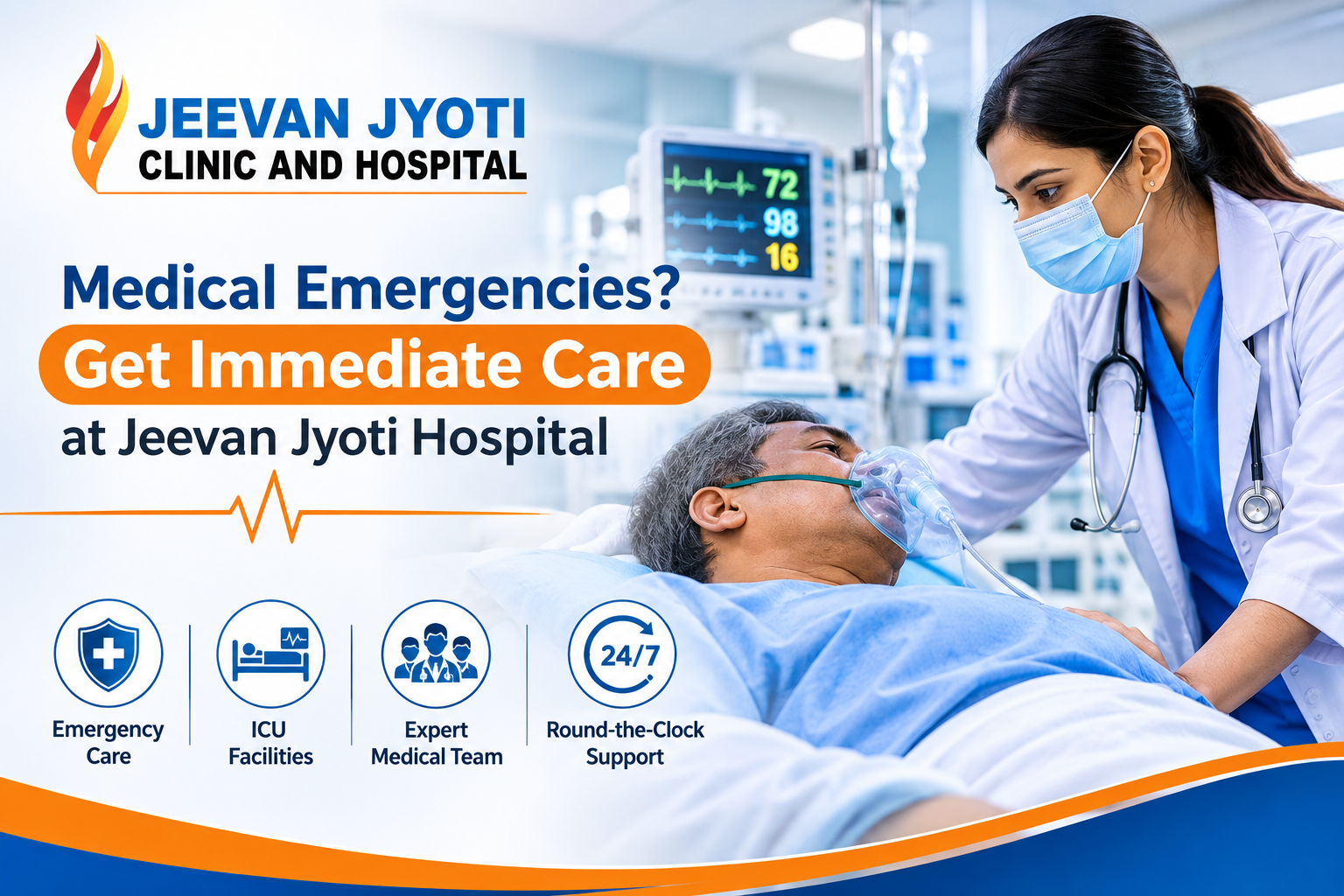
Jeevan Jyoti Hospital, in Shahdara East Delhi, has emergency and Intensive Care Services for patients needing urgent and immediate help. Not all medical conditions need intensive care. Many medical problems can be managed through a routine health check up. It is important to be aware of conditions that need emergency care.
This article describes medical emergencies, actions to be taken in case of an emergency, when Intensive Care is warranted, and how to choose the right hospital in East Delhi.
Severe Breathing Problems
Uncontrolled Bleeding
Loss of Consciousness
Altered Mental Status Seizures
Severe Allergic Reactions
Burns
Poisoning
Pregnancy Emergencies
Severe Infections
If you think that there is a serious problem, you should immediately call India’s 112 or go to the nearest hospital. Do not wait for the condition to improve on its own.
10 Serious Symptoms Requiring Immediate Medical Help
There are certain symptoms of various conditions that if present should prompt you to call for medical help. Following are some of those.
1. Chest Pain
Chest pain is one of the cardinal symptoms of a heart attack. Other symptoms may include:
Pain in the arm or back
Trouble breathing
Dizziness
Nausea
Weakness
What should you do? If you think that someone is having a heart attack, you should call for help and don’t drive.
2. Shortness of Breath
Shortness of breath can be caused by an asthma attack, infection, or other conditions.
Possible signs and symptoms may include:
Gasping for breath
Difficulty in speaking
Purple/Blue colored lips
Rapidly worsening shortness of breath
What should you do? Call for medical help and go to the hospital.
3. Uncontrollable Bleeding
Severe, uncontrolled bleeding can happen for various reasons and it requires immediate attention.
Possible signs and symptoms may include:
Reduced alertness
Nausea
Weakness
Pale skin
Sweating
3. Sudden Weakness or Difficulty Speaking
A stroke is when the blood flow to the brain is interrupted or when there is a brain bleed. This requires immediate medical attention.
REMEMBER the signs of a stroke:
Face- One side of the face is drooping.
Arms- One arm is weak and drifts down when trying to raise it.
Speech– Speech is slurred and hard to understand.
Time-If you see any of the above signs, call 911 right away.
Other signs of a possible neurological emergency include loss of balance, confusion, changes in vision, and a severe headache.
What should you do? Write the time the symptoms began. Write the time the person was last known to be well. Do not wait for the symptoms to improve or disappear.
4. Unconsciousness, Fainting or Confusion
Someone that is suddenly unconscious or confused, and/or cannot be awakened requires immediate medical help.
There are numerous possible causes of these symptoms and can include serious infections, heart problems, low blood sugar, stroke or seizures.
Someone that is unconscious and not in control of themselves should be assessed if they have signs of an injury, difficulty breathing, or chest pains. Also, the person should be assessed if they are not quickly waking up.
What to do? Check for response and normal breathing. If the person is unconscious or difficult to arouse, call EMS. Otherwise, follow the instructions of the emergency operator, and, if available and needed, use CPR and/or AED. Do not give food, drink, or medication to an unconscious person.
5. Severe Bleeding or Major Injuries
Large amounts of blood loss, major cuts, fractures, and other work-related or accidental injuries can occur from falls or other incidents.
Major injuries and/or bleeding that requires emergency care includes, but is not limited to, the following: deep cuts that do not stop bleeding with firm pressure, major broken bones and/or burns, injury to the neck and/or the spine, head injuries, abdominal injuries, and other major injuries to the body.
Loss of blood can occur internally, and signs may include feeling faint, dizzy, weak, and/or fainting as well as worsening abdominal pain.
What to do? For external bleeding, use firm, direct pressure, and do not move the person with a suspected spinal injury unless it is an emergency. If EMS has not been called, call for assistance. If a severe allergic reaction occurs and EMS has been called, give adrenaline if prescribed and if it is part of the emergency plan. Do not wait for the allergic reaction to be treated by an antihistamine.
8. Severe Abdominal Pain
Sudden, intense abdominal pain is a medical emergency. It can be from appendicitis or intestinal obstruction.
A pregnant woman is having abdominal pain.
What should I do? You should take the person to the emergency room. You should not give the person any medicine.
9. High Fever with Signs of Serious Illness
A fever typically means that the person has an infection, but there are other conditions that can be serious and include fever.
A fever can become very dangerous when accompanied by certain symptoms. You should seek emergency care if a person has a fever and any of the following symptoms: confusion, difficulty breathing, a stiff neck and a severe headache, a seizure, collapse, worsening condition, or if the person has a new serious symptom.
If your baby is less than 3 months of age and has a fever (temperature of 38ºC or higher), you should seek medical attention. You do not need to wait for other symptoms.
What should you do? You should call an ambulance if the situation is life threatening. It is better to seek medical help than to rely on home remedies.
Pregnancy-Related Emergencies
There are a number of symptoms during pregnancy and after child birth that are considered a medical emergency and require immediate assessment. These symptoms include heavy vaginal bleeding, abdominal pain, fainting, chest pain and/or shortness of breath, seizures, a severe headache that is accompanied by changes in the person’s vision, and fewer fetal movements that occur after the time when normal movements should happen.
What should you do? You should call an ambulance or go to the emergency department. Emergencies like these require immediate care. If bleeding and pain are the only symptoms, it is always best to seek help to determine the cause.
A Day in the Life of an ICU
A critical care unit (ICU) is a specialised, more closely monitored environment than a general hospital ward. The level of care may include, but is not limited to, the following:
Continuous cardiac and vital sign monitoring.
Mechanical ventilation for respiratory failure.
Fluids, electrolytes and medications administered by the intravenous route.
Repeated diagnostic studies.
Nursing and medical care.
Renal replacement therapy (e.g., dialysis) for critical organ system support.
Support for organ systems failure is to ameliorate the effects of the critical illness and to stabilize the patient’s body functions, in addition to providing care to detect any changes in the patient’s condition.
Finding the Best ICU Facilities in East Delhi
Selecting a hospital becomes extremely critical when a family member suffers from a critical illness. While promotional descriptions can be misleading, hospital services, specialisations and facilities pertinent to the family member’s illness should be considered when making a decision.
Some patients may require access to other specialised medical teams/resources, e.g. renal access/dialysis, interventional cardiology/radiology, cardiac surgery, neurosurgery, etc.
3. Qualified Doctors and Critical Care Staff
The treatment of patients in an ICU is a collaborative effort of the medical staff, nurses and allied health personnel. Find out about their clinical services and specialised support.
4. Diagnostic and Specialist Support
Emergencies can arise and require a variety of diagnostic studies/tests.
The ability of the hospital to rapidly organise different types of specialist/diagnostic support can be valuable for patients whose conditions can deteriorate rapidly.
5. Clear Communication with Families
The family has the right to be informed about the patient’s condition and planned treatment including any further diagnostic tests, the likely next steps and the costs involved.
Ask the treating team to explain the situation to you in a clear and simple manner.
Understand when the treating team is seeking clarification from the family and what is the reason for the same.
While looking for the best available ICU beds and ICU facilities in East Delhi, check the services available at each of the facilities and confirm bed availability. Find out if the facility has any specialized resources to provide the services needed.
In case of a true emergency, contact the nearest emergency service provider or go to the nearest appropriate emergency department.
What Should You Do Before Reaching the Hospital?
If you can respond safely and help guide the response, take the following steps:
Keep the Person Safe
Stay with the patient to help them stay comfortable and provide directions to the emergency services personnel.
Aim to help the person in an unsafe situation (such as if a person is threatening you) by calling the emergency services.
If the person is unconscious, do not give anything to them by mouth (Swallowing must be made safe).
Do not attempt to give any prescription medications or provide any treatments that you are not trained to do or are not sure how to do safely.
In the absence of compromising the emergency, if you have time on your side, let the treating staff know the following information about your family member/friend:
Name and Age
Known Medical Condition
Medications, Allergies
When did the symptoms begin?
Were they sick/injured before?
Do they have medical records? Recent test results?
What kind of medical conditions do they have?
Stroke and serious breathing problems and chest pains are emergencies and do not require the development of all symptoms before medical help is sought.
When time is crucial, for example in a real emergency, desk work and routine appointments don’t matter.
Frequently Asked Questions
1. What are some examples of medical emergencies?
Some examples of medical emergencies include: loss of consciousness, protracted or repeated seizures, active bleeding that isn’t controllable, anaphylaxis or other severe allergic reactions, signs of a stroke, serious medical conditions and/or injuries.
2. Do all medical emergencies require care in the ICU?
No, not all emergencies require care in the ICU.
3. What should I do in case of an emergency in East Delhi?
Find the emergency department that can provide the necessary care and initial treatment for the patient. Other services that may also be located in the same facility to treat the patient’s emergency are also to be found here. In a true emergency situation, the main goal should be getting the patient to a facility that can provide the needed care as quickly as possible.
4. What are the indicators that patient care may require ICU?
Condition requiring ICU care may be major and/or significant breathing problems, patient’s hemodynamic instability, reduced level of consciousness (i.e. depressed level of consciousness), patient’s dysfunction of one or more vital organs (i.e. organ failure), major patient injuries and other serious patient conditions and complications.
5. What is the difference between an ED and ICU?
The emergency department is for patients who have time critical illnesses and injuries while ICU is for patients with serious and life threatening conditions and illnesses.
6. Is Jeevan Jyoti Clinic & Hospital open for emergencies at night?
The hospital emergency department works 24/7, according to the hospital website. For up to date information contact the hospital. The information may help avoid delays in treatment.
7. What should I bring when taking a patient to the hospital?
If time allows, bring patient identification, medical records, prescriptions, allergy information, and a list of recent tests. If there is no time to gather these, do not let this delay transporting the patient to the emergency department.
8. What is the emergency number to call in Delhi?
To contact emergency services in India, dial 112.
Conclusion
Knowing when to seek immediate medical attention is important to the patient and their family. The patient and family should know how to address a medical emergency. The most important thing is to get help for a patient who has lost consciousness, suffering from sudden changes in their neurological status, severe chest pain, major traumas, and difficulty in breathing.
The residents of Shahdara and surrounding areas can feel secured after familiarizing themselves with the emergency, ICU and other related services of a hospital of their choice in East Delhi such as Jeevan Jyoti Clinic & Hospital.